We assume that if we stripped away all the flesh, our skeletons would be the same shape, allowing for height and width, but this is not true.
Look at the hip joint for example. These images show the femur (thigh) meeting the pelvis.
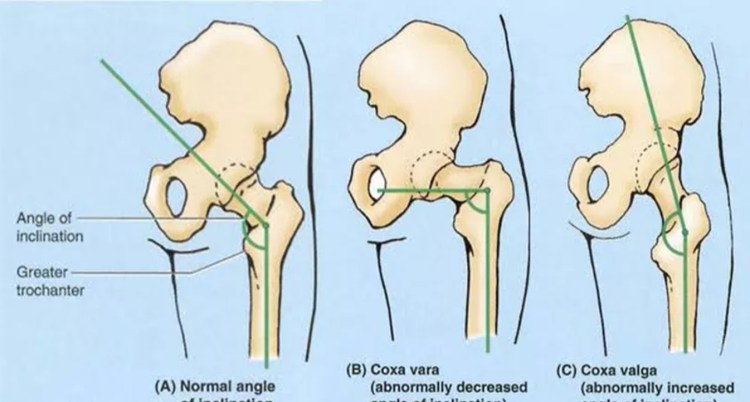
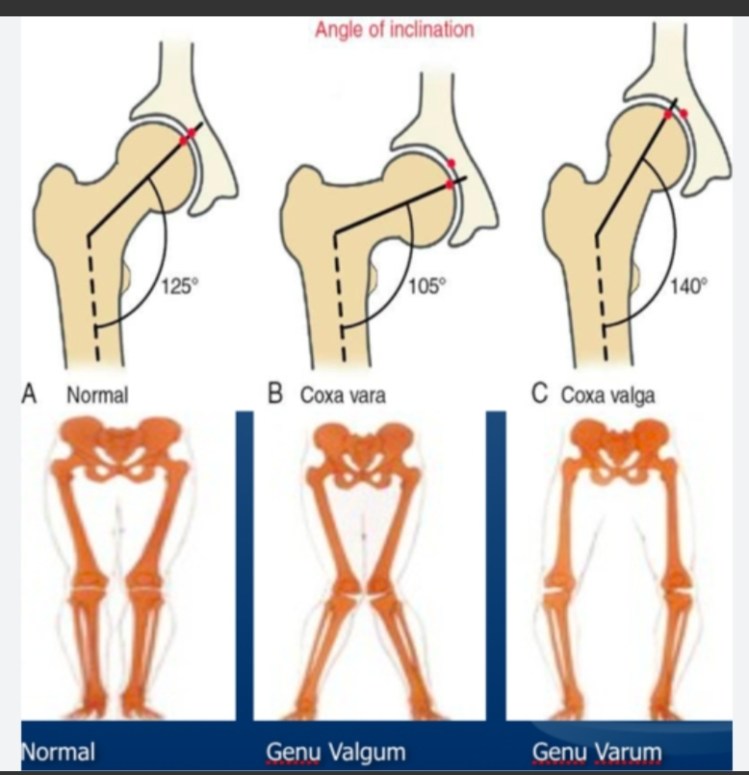
The most common angle for the head of the femur (the ball part) to sit in its socket, is around 130° . In some cases it can be more, up to 140°, called coxa valga, which may give a bowed leg appearance. In some cases the angle can be less, around 105°, called Coxa vara, creating a knocked knee appearance.
This is one reason why there is no “correct” stance for squatting. Some people will feel more stable and achieve better depth with a wide stance and toes pointing slightly outwards, on the other hand (or foot), you may feel better with feet more under the hips and toes pointing forward.
Play around with your stance and foot angle and see what feels good for you.

